
Church
How Teacher–Student Relationships Shape Lifelong Learning
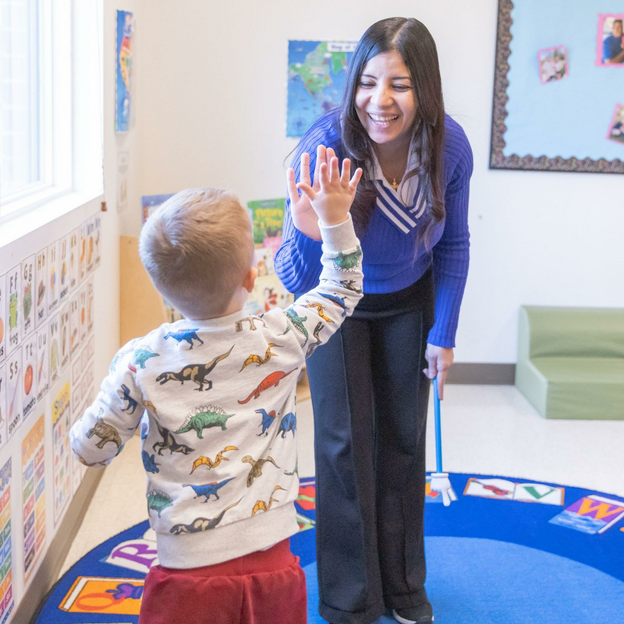
Reflecting on my early educational experiences, I recall the initial challenges I faced when I began attending school. Despite my current career in early learning education, my introduction to school was far from positive. My home environment was unstable, I faced a language barrier after relocating across the globe, and I lacked any form of self-regulation. These factors contributed to my initial aversion to school, hindering my academic progress. I vividly remember an incident where I tore up my homework in front of my teacher. However, a pivotal change occurred one year—not in the school or curriculum, nor in my home life, but in the form of two remarkable educators, Mr. Raymond and Ms. Jordan. They recognized potential in me that others overlooked and invested time in building a personal connection, beyond just academic instruction. Through their guidance, I discovered that school could be fun and a safe place. Their influence was transformative, and teachers continue to have such an impact today.
As the Curriculum Coordinator at Vine & Branches Lutheran Church & Childcare in Aldie, Virginia, I am deeply committed to supporting teachers, because they are at the heart of the school. The personal relationships they cultivate with students are crucial for fostering an environment where children feel safe, trusted, and empowered to explore, take risks, and grow with confidence.
Learning Begins with Connection
Young children learn best when they feel secure and supported. When teachers build warm, consistent relationships with students, they create an environment where children feel seen, valued, and understood. This sense of belonging encourages children to engage more deeply in learning and to feel confident trying new things.
Teachers as Powerful Role Models
In early learning classrooms, teachers are not only educators—they are role models. The adage “imitation is the sincerest form of flattery” is consistently validated in the interactions between young children and their teachers. Children absorb knowledge by observing the adults around them. When teachers model kindness, patience, curiosity, and problem-solving, students begin to mirror those behaviors in their own interactions.
Teachers often narrate their actions, thoughts, and feelings throughout the day. For instance, when a teacher says, “I’m feeling frustrated, so I’m going to take a deep breath and think of a solution,” students learn what healthy emotional regulation looks like in real-time. When teachers model sharing, turn-taking, and respectful communication, children gain clear examples of how to interact with others.
Learning Through Everyday Moments
At Vine & Branches Lutheran Church & Childcare, we encourage our teachers to articulate their processes to students. By verbalizing problem-solving and decision-making, teachers make learning visible. Simple moments—such as resolving a classroom challenge, managing big feelings, or working through a mistake—become powerful teaching opportunities. Students begin to internalize this language and apply it during play, peer interactions, and independent problem-solving.
Over time, children start using the same strategies and words they’ve heard from their teachers, showing just how impactful modeling can be in early learning environments. They acquire skills that may not be modeled in other areas of their lives, and that can last a lifetime.

What to Expect on Your First Sunday at Vine & Branches
Visiting a new church can feel intimidating, especially if you’re not sure what to expect. At Vine & Branches Lutheran…

Faith & Fun in NoVA:
🌞Faith & Fun in NoVA: A Summer Family Activity Guide! As our incredible summer camp weeks roll on at Vine…

Get to Know Tiffanie Presley – Vine & Branches Administrative Assistant
Tiffanie Presley joined Vine & Branches Lutheran Church & Childcare in April 2026 as the Church Office Administrative Assistant, bringing…

From the Pastor’s Desk – Count It All Joy
“Count it all joy, my brothers, when you meet trials of various kinds, for you know that the testing of…

Kindergarten Readiness in Full Bloom
The preschool years are filled with incredible growth, and at Vine & Branches Lutheran Church & Childcare, our four-year-olds classroom…
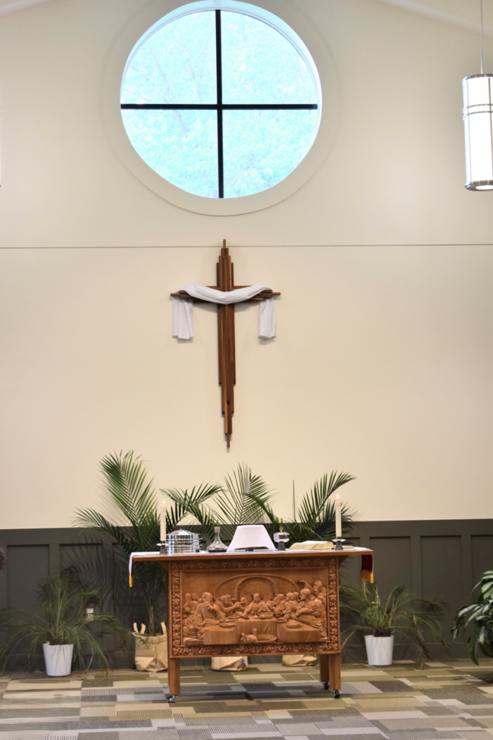
A 2026 Good Friday Devotion from Pastor Chris
“Then Jesus, calling out with a loud voice, said, ‘Father, into your hands I commit my spirit!’ And having said…